
Don Mowery
Don Mowery served in the United States Army as a dental lab technician and was stationed in Vietnam from 1968 to 1969, although he stayed in the Army for over 20 years. He belonged to the 219th Medical Detachment Dental Unit in Chu Lai and served by performing a number of medical tasks: he worked in dental laboratories, assisted in dental surgery, and traveled to Vietnamese communities as part of a medical staff to perform emergency dental operations. He was present for both the 1968 Tet Offensive and the ‘Mini-Tet’ a year later, which he later described as the “...two scariest times of my life.” He left Vietnam in 1969, served as a recruiter for roughly five years afterward, and left the military in 1977 to work in dental labs across the country.
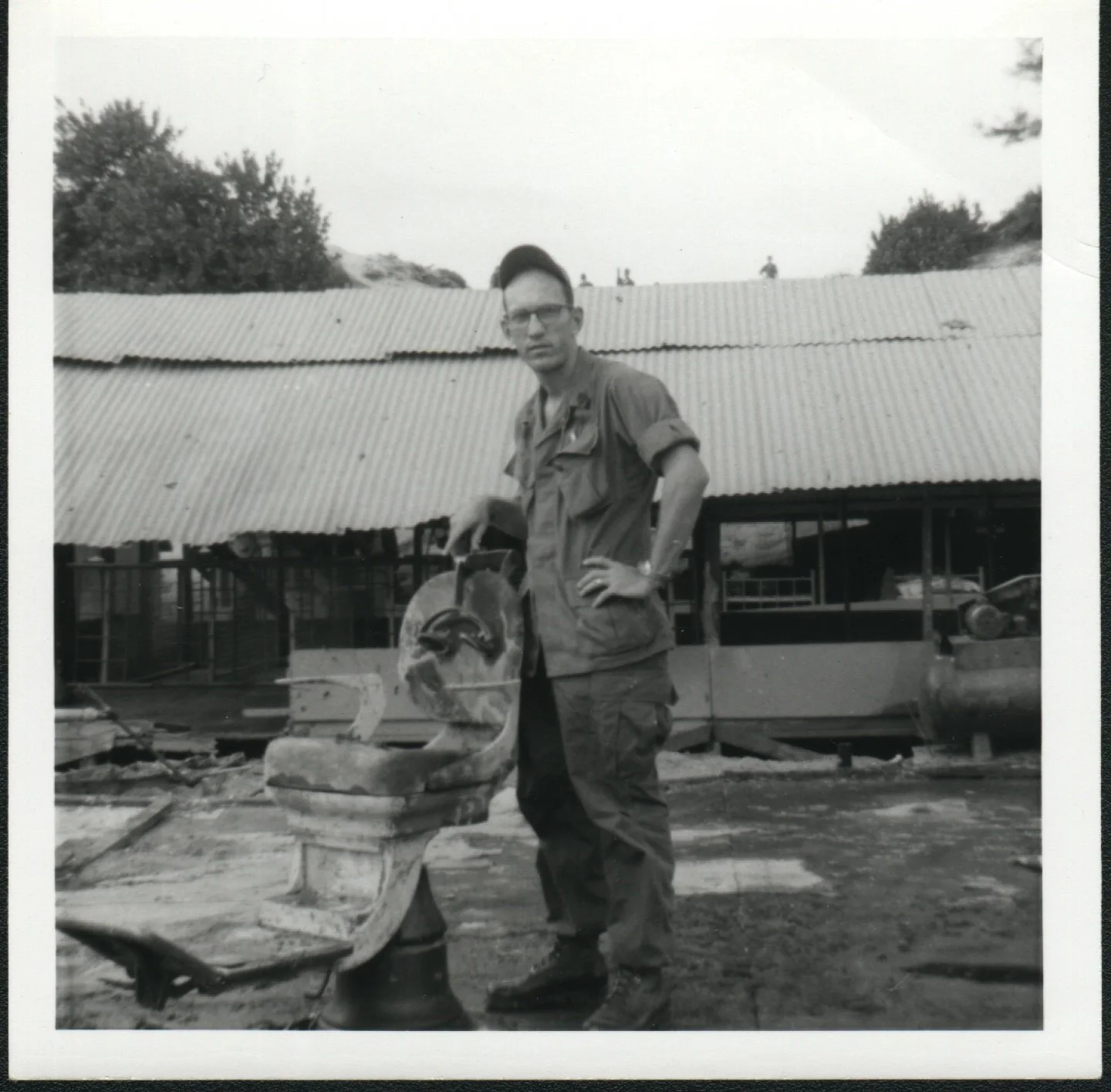
This photograph was called "shrapnel.” It shows Don Mowery in uniform, standing next to a dentist’s chair damaged by shrapnel. (Object ID P2069.S14)
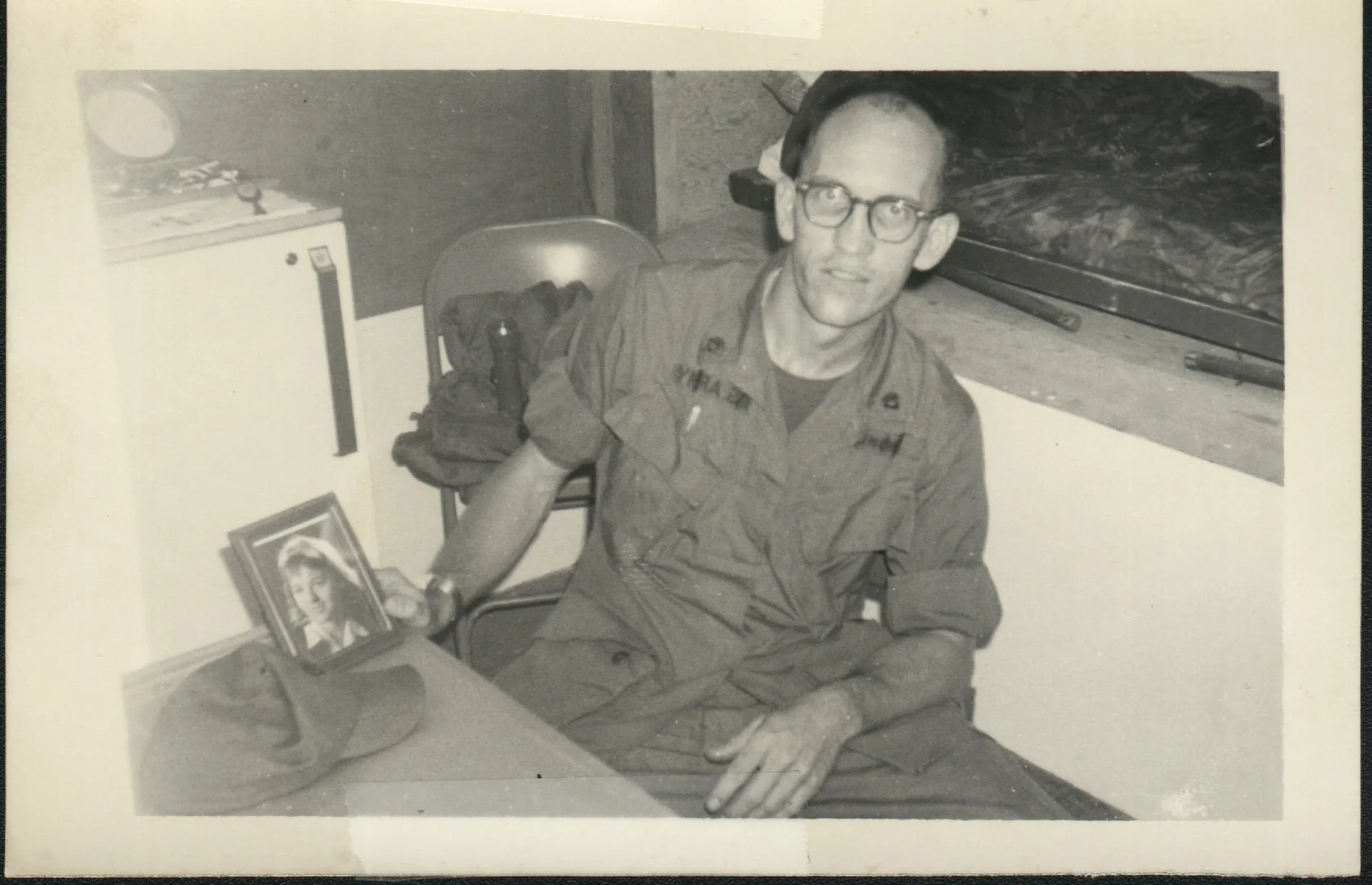
Don Mowery sitting at his desk with a photo of his wife. (Object ID P2069.S30)
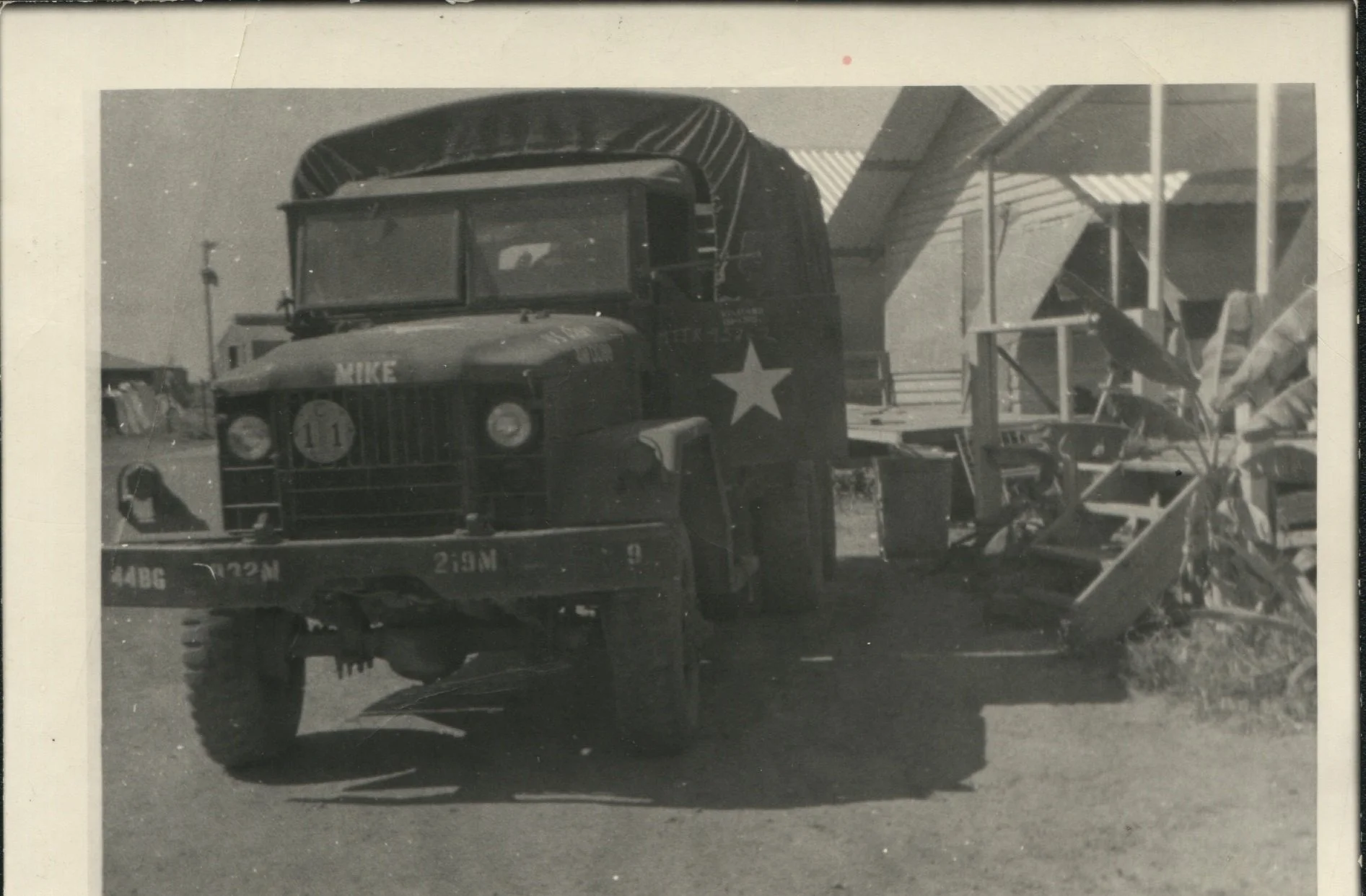
A military truck called "Mike.” (Object ID P2069.S10)
Dentistry at War
It’s time to pretend you’re part of Don’s social circle. Who will you be? You can choose one of the following:
Mother
Father
Wife
Sibling
You know Don’s desire to be a part of the military and make a difference, but you also want him to stay safe. How could you
dental and psychology
These dental professionals played a crucial role in maintaining the health of soldiers. Dental care is essential in the military, as maintaining troop morale and physical fitness is critical for operational readiness. Dentists were often tasked with providing immediate care for injuries, performing extractions, and treating oral infections, sometimes under less-than-ideal conditions.
In addition to the technical aspects of their role, dentists witnessed the broader impacts of warfare. They interacted with soldiers dealing with the physical and psychological toll of combat. Many people experience significant stress that can manifest as oral health issues, so dentists must be compassionate listeners and caregivers, offering not just dental treatment but also support in other ways. The experience likely took a toll on their emotional well-being as well. Dentists had to grapple with the realities of war, witnessing loss, trauma, and the harsh conditions faced by those serving alongside them. The situation could become even more complex when dealing with issues such as limited resources, makeshift environments, and the constant threat of danger.
Think about what it might have felt like to serve as a dentist in a war or to have to fight in a war with a sore tooth. How would you manage the experience? If you were Don, what could you say to the soldiers you treated to support them? If you were a service member with a cavity, what would you say to Don?
Digging Deeper
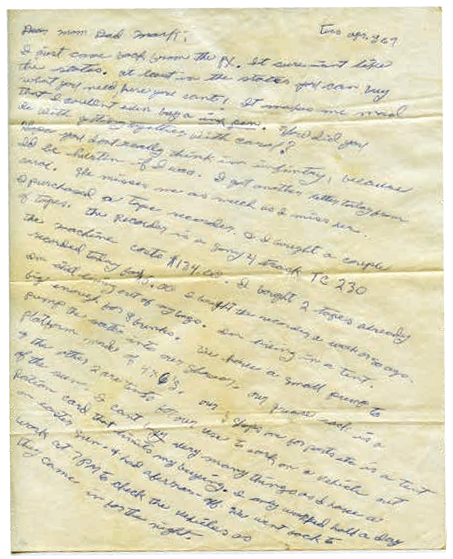
Emotional Context: Soldiers often wrote under intense stress, fear, and homesickness. Their words may reflect anxiety, trauma, or attempts to reassure family members. Sometimes, they tried to downplay dangers to avoid causing distress at home.
Limited Perspective: Letters often offer a very personal, subjective view. They may not represent the full reality of the war, broader events, or the experiences of other soldiers.
Communication Delays: Letters took weeks to arrive, so events described were often already outdated. This lag could create confusion or misunderstandings between soldiers and those back home.
Cultural and Historical Context: Understanding the era’s political climate, anti-war sentiment, and soldiers’ backgrounds helps interpret the letters’ tone, content, and subtext.
Psychological Impact: War letters can reveal the psychological toll of combat, including signs of trauma, loneliness, and moral conflict, even if not stated explicitly.
Expressions of Camaraderie and Routine: Soldiers often shared stories of daily life, friendships, and mundane routines, which provided comfort and a sense of normalcy amid chaos.
Hope, Longing, and Connection: Letters were a crucial emotional lifeline. Pay attention to expressions of hope for the future, longing for home, and efforts to maintain relationships despite distance and adversity.
Don (the eldest of eight children) was born in the small town of Greenup, Kentucky, but when he was about two years old, his family moved to Greenfield, Ohio, where he would grow up. In 1956, when he had turned 18, Don dropped out of school and joined the military. He attended basic training at Fort Leonard Wood, Missouri, and then went to Fort Bragg, North Carolina, for airborne paratrooper training. While he was finishing jump school, Don transferred to dental school in Fort Gordon, Georgia, to become a dental technician. He spent three years there until he was injured while playing softball and placed on the Temporary Disability Retired List for a few years. During that time, he returned to Ohio and worked as a printer.
After those years had passed, Don was cleared for service and re-entered active duty. He was stationed in Frankfurt, Germany, as an operating room dental assistant, where he met his wife, Christa. They got married in 1966, and Don spent a total of three years in Germany before being transferred back to the US, to Fort Sam Houston, Texas. While there, he spent nine months on standby for deployment to Vietnam, a deployment that was ultimately canceled. Afterward, he attended Officer Candidate School at Fort Benning, Georgia, although he was never able to complete it; before graduation, his OCS group’s commitments were canceled by Robert McNamara, the US Secretary of Defense. Don and his classmates were told that if they graduated, they would be sent to Vietnam as infantry officers. He and 51 others dropped out, and he retained his rank of sergeant (E-5). In early 1968, he was deployed to Vietnam as a dental lab technician and was assigned to the 219th Medical Detachment in Chu Lai (in the northern region of South Vietnam, under the jurisdiction of I Corps). His medical unit worked closely with the America l Division, some elements of which were infamously involved in the My Lai Massacre in March 1968.
Don spent the majority of his service at Chu Lai in dental laboratories making false teeth, but also traveled throughout I Corps as part of a medical team performing dental exams and emergency dental procedures for both US troops and Vietnamese civilians. While he and his staff were away from the hospital, though, they got word that their hospital had been attacked by the Viet Cong. “One nice, bright early morning, we'd already sent the dentist on the road,” he recalled in 2025. “They left already, you know, drove up by the Jeep every morning to go to work and with assistants. And the attack came in and the guys got on the radio and stopped the jeep… we got a call to go up there a little later to see what was left. My roommate and I actually, and all that was left was a chair standing there.”
He had the distinct misfortune of being stationed in Vietnam during both Tet Offensives, in January-February of 1968 and 1969, respectively. The first occurred just as he arrived in-country: “...you get off an airplane. You head for the terminal stuff, and all of a sudden, all hell breaks loose. I mean, it's like being in the middle of the 4th of July fireworks, and you don't have a damn thing to protect yourself with. You're kinda stuck.” He described being called out to remote firebases to perform dental work just as the second broke out a year later: “Those times were apprehensive because you're going to a fire base out here… No damn thing around you, you know, except bad stuff. And you're hoping things don't happen… I've been at a firebase when they got hit by rockets and attacks and stuff like that. And you just find a bunker and dive in and grab your weapon and do what you got to do.”
Don left Vietnam in early 1969 and transferred to the Army Reserve, working as a dental lab technician in civilian life. He was selected for recruiting duty, which is how he and Christa ended up in Minneapolis, Minnesota. He served in the military for a total of 28 years. He and Christa have two sons and live in Andover.