Gary Nereson
Gary Nereson, of Andover, MN, served in the US Army during the Vietnam War, first as an infantryman and later as an electrician, working in the US’s rural electrification program in South Vietnam. He was in-country from early 1969 to early 1970, during which time he was tasked with bringing electricity to remote South Vietnamese villages as part of MACV’s Advisory Team 66.
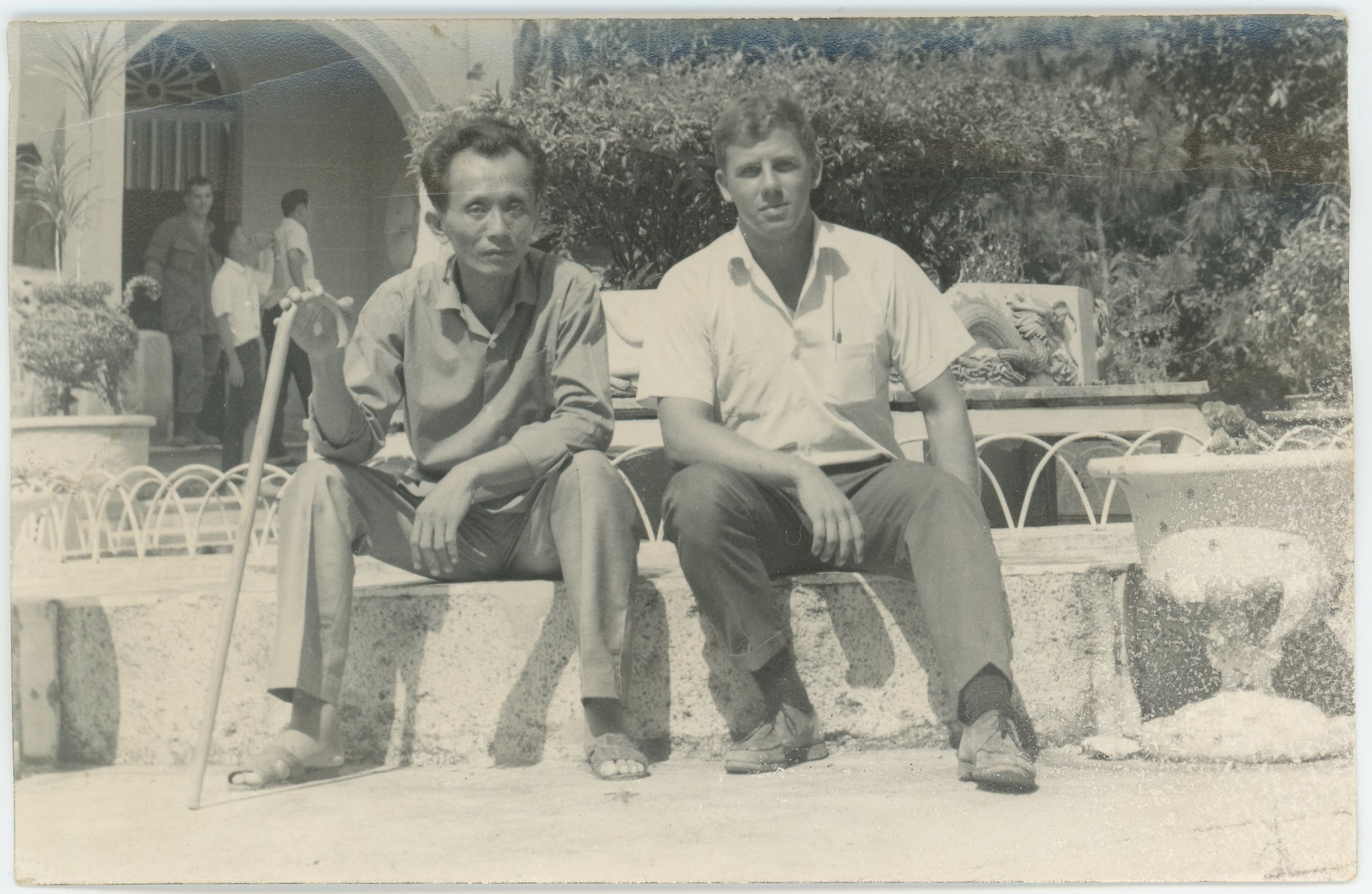
Gary Nereson sitting with his Vietnamese interpreter, ca. 1969. (Object ID 2024_2096_002_11)
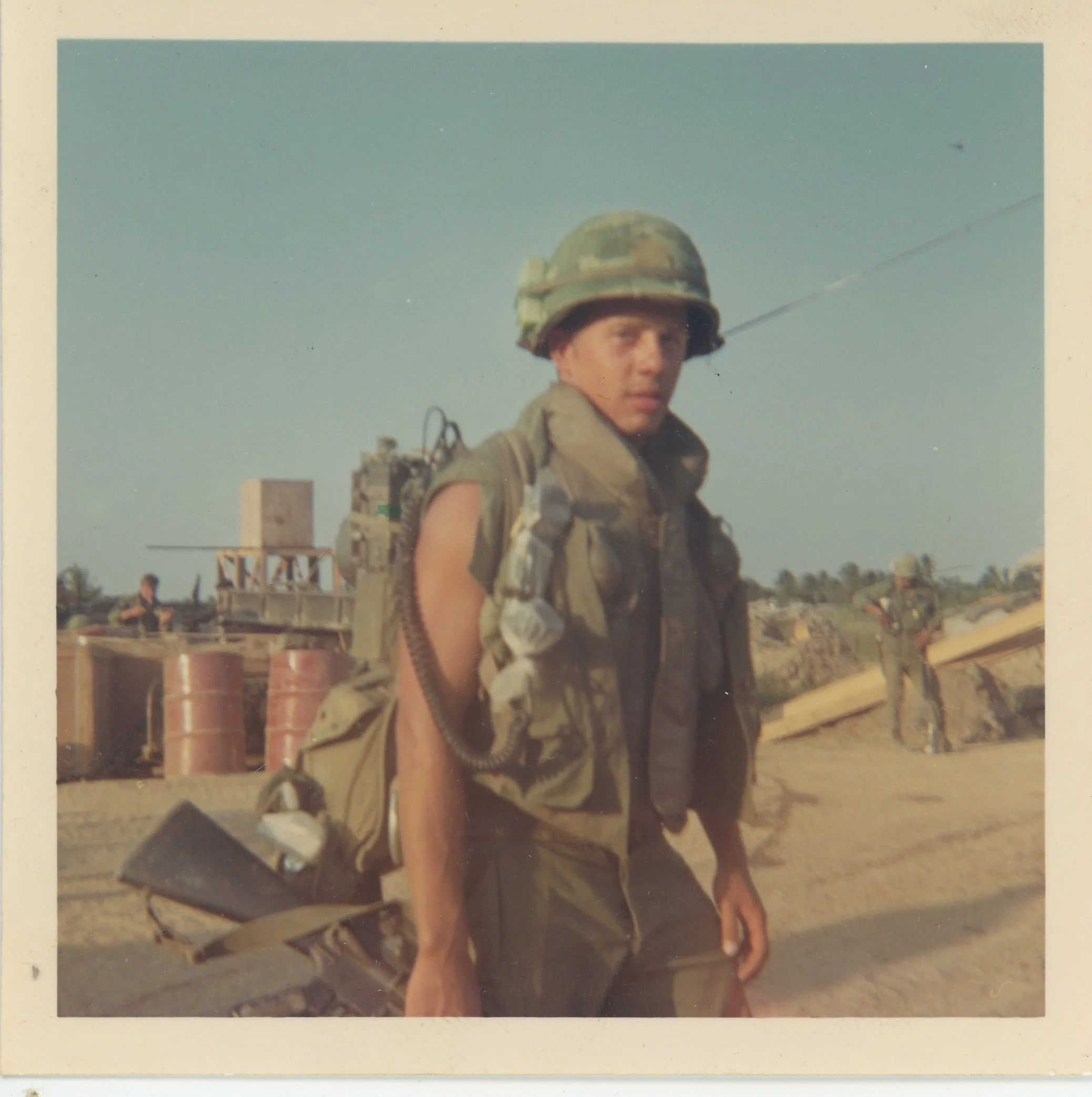
Gary Nereson in combat gear, ca. early 1969. (Object ID2025.2096.019.07)
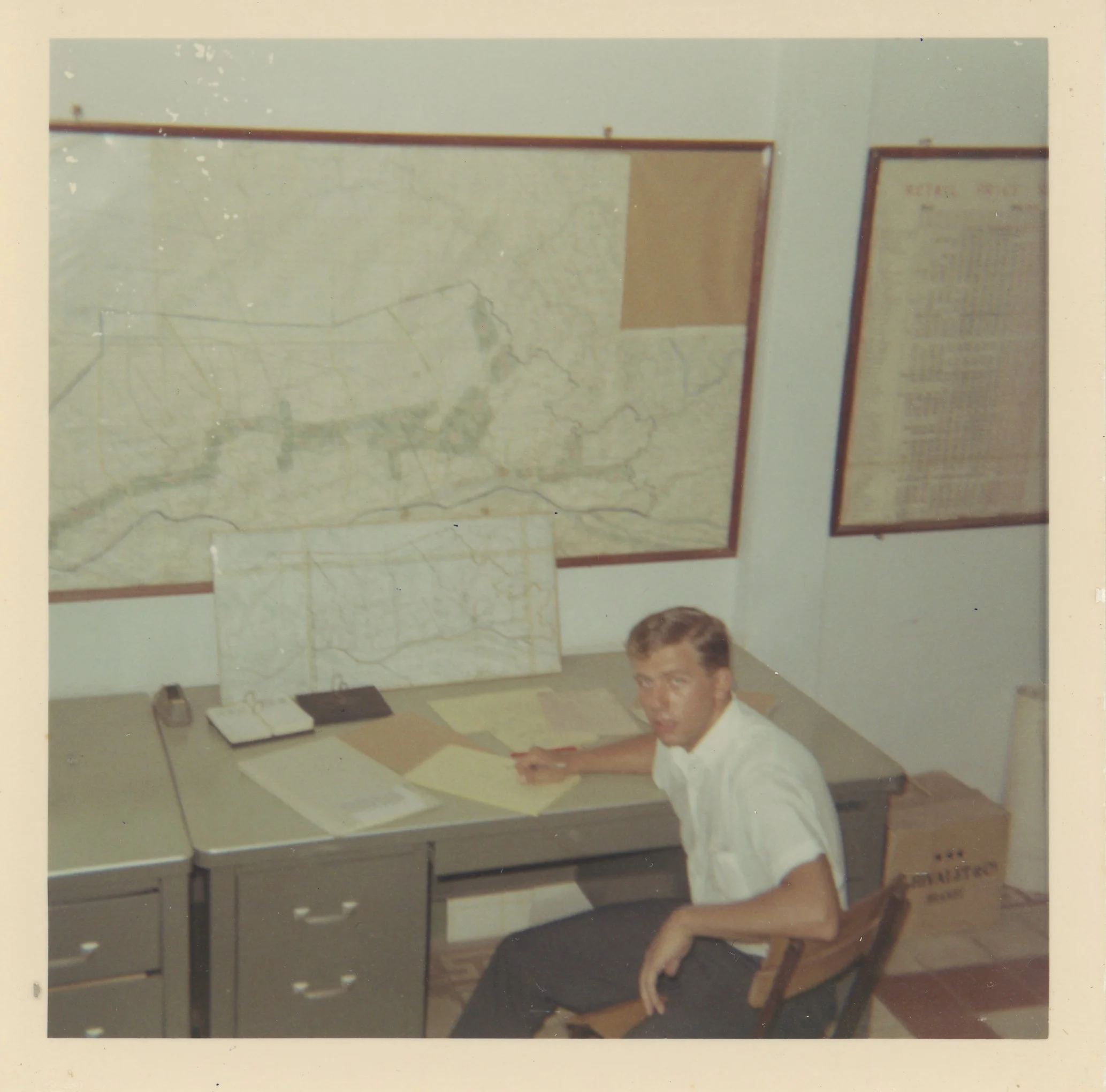
Gary Nereson at his desk at MACV Advisory Team 66 headquarters in My Tho, ca. 1969. (Object ID 2025.2096.019.67)
A Different Experience
Gary began in a combat role in Vietnam, but ended in a more civilian-looking position. Take some time to think about how this might have affected his memories or feelings about his deployment.
Electrification
Electricity keeps our schools and homes running here in Anoka County. Think about what it might have been like to live in a war zone with no electricity. What would some of those challenges or benefits be?
Gary wrote lots of letters back to his wife and baby girl, but doesn’t want anyone to read those personal items. How does what we know about Gary’s experience change with this decision? What can we do to preserve his story without knowing those intimate details?
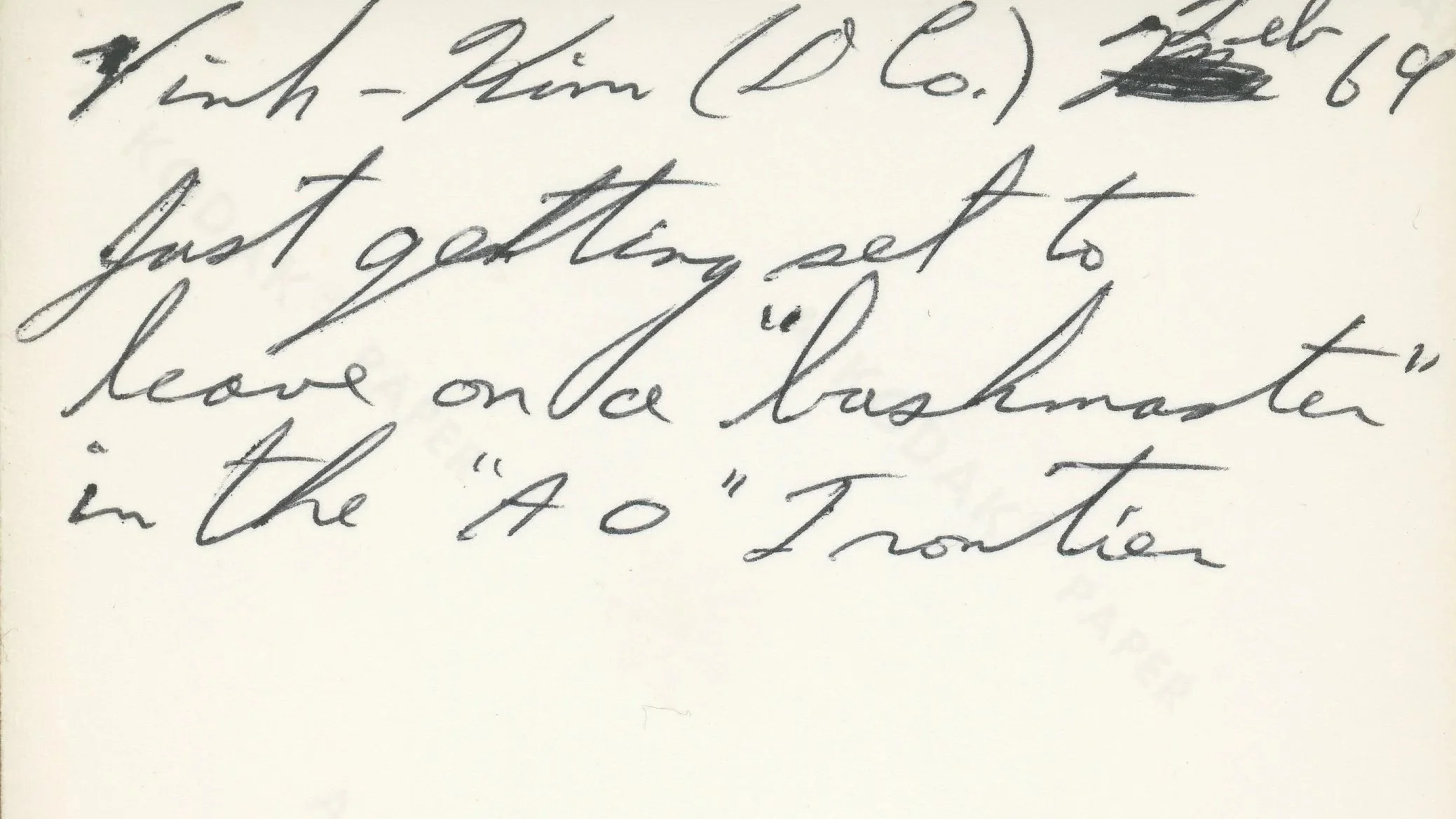
The back of object ID 2025.2096.019.07
cursive
The skill of reading and writing in cursive has evolved over the last 50 years as keyboard use has grown. Most of the documents and letters in the ACHS collection are written in cursive. Can you decipher any of the message on the back of the photo? Context clues might help you — match up the object ID number on this image with the photo above.
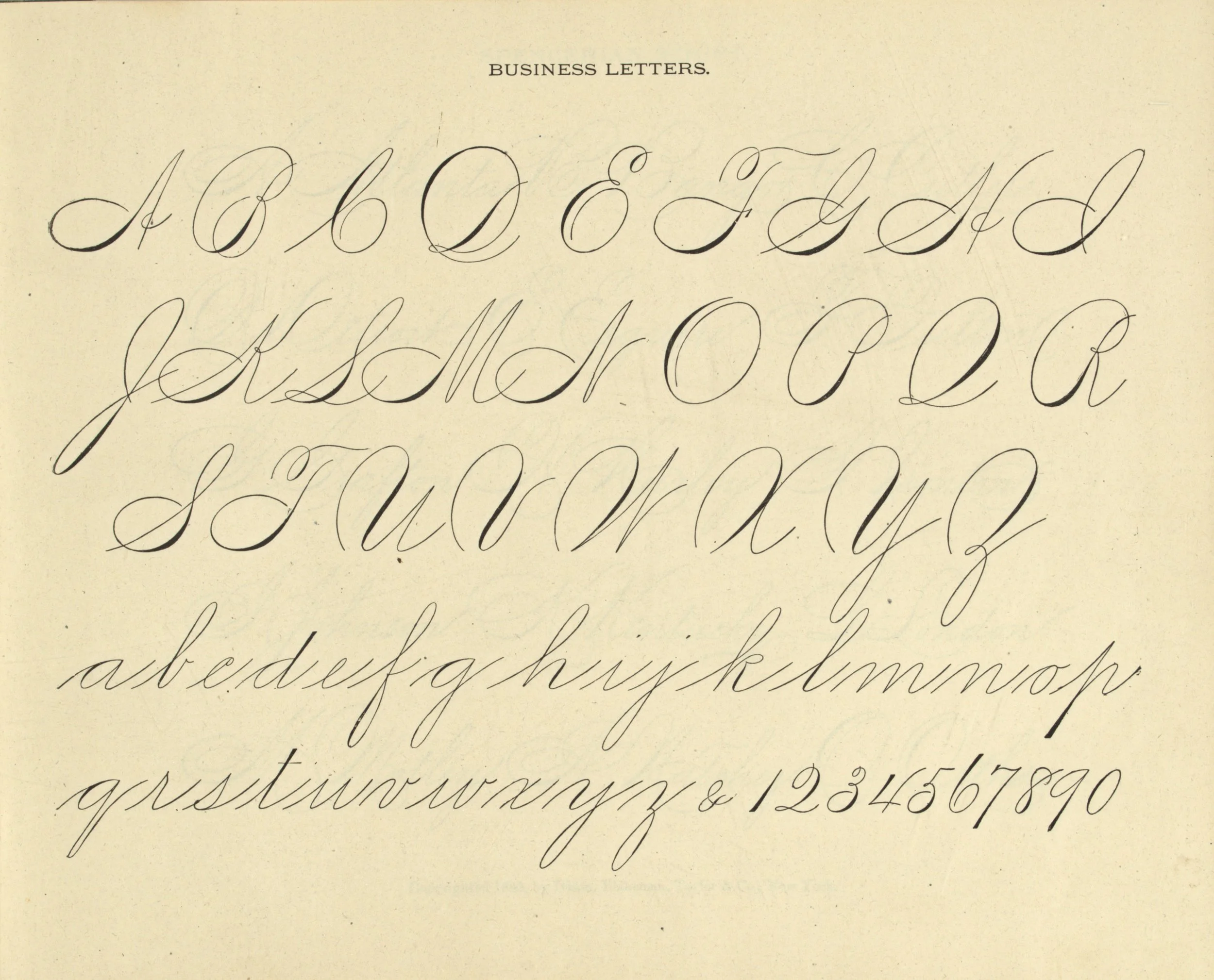
penmanship workbook, 1881
Cursive has changed over time. Look at these letters written in a workbook from 1881. What similarities and differences do you see between them, and how Gary wrote? What impact do you think being in a war would have on your penmanship?
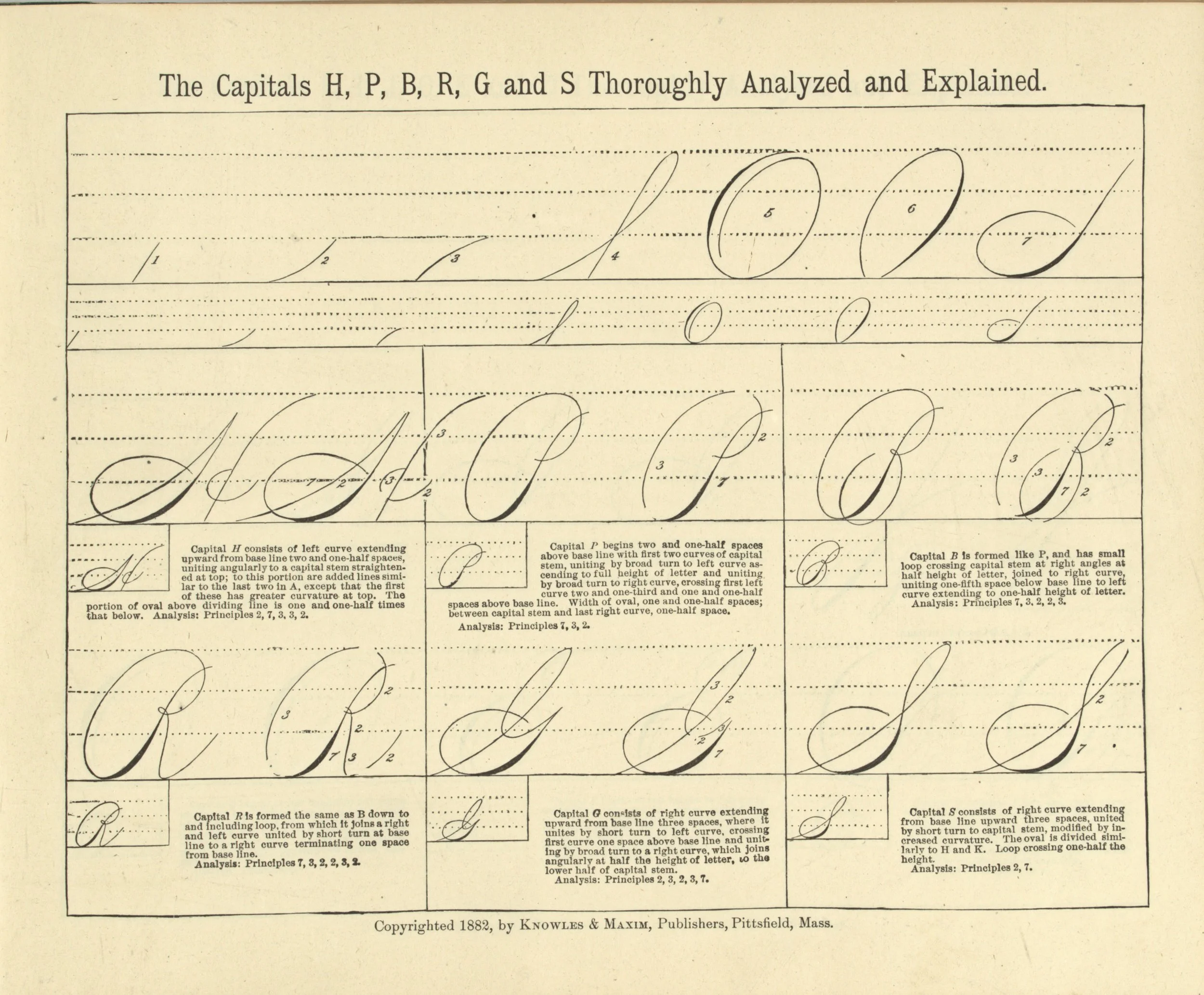
Give it a try!
Take a big breath and see if you can draw the letters using the directions above. Some letters have one simple step (the “O”), and some have a more complicated path for your pen (the “R”).
Digging Deeper
Gary was drafted into the Army in August of 1968 and attended basic infantry training at Fort Lewis, Washington. During his training, anticipating deployment to Vietnam, he proposed to his then-girlfriend, Gayle, over the telephone. “Whenever I could get a break from whatever we were doing and find my way to a telephone to be able to call her, then I'd call,” he later recalled. “During one of those conversations, she said, ‘Oh, I'm pregnant.’ Surprise. That wasn't something I expected to hear but we exchanged pleasantries and said goodbye. Then I went back to the barracks, and I had a friend who had… become a friend and a confidant. I talked with him and then that went by for a couple of days. I'm still talking to him about it, which I do and he said to me, ‘Well, you know what you're going to do, you just got to figure out what you're going to say.’ He was right, of course. I called up Gayle that day and I said, ‘Listen up. This is Gary Nereson talking. Will you marry me?’”
He and Gayle married on December 27th, 1968, and only 10 days later, he was on his way to South Vietnam. “I was scared. Thousands like me had already been killed in Vietnam. Would I be another? On the day that I shipped out, I called my mom and dad from the airport in San Francisco, waiting for the flight to Vietnam crying like a baby. I would have called Gayle, but I couldn't burden her with something like that.” Gary arrived at Dong Tam Base Camp in the Mekong Delta and joined Company C, Third Battalion, 39th Infantry Regiment as a rifleman. His unit operated under the jurisdiction of IV Corps.
“Our company, the 39th, was stationed in the Southern part of Vietnam called the Delta in a dried-up rice paddy field. We ran countless search and destroy missions looking for Viet Cong, the guerilla insurgency partners in the North Vietnamese Army. These missions were carried out by 12-person platoons, flown by helicopter into a search area for one, two, or three days, and then extracted. In my 12-person platoon, I carried the M60 machine gun. Every day was uncertain. You didn't know what might happen. Firefights, landmines, and snipers, we encountered them all.”
In the middle of 1969, President Richard Nixon had decided to begin a general withdrawal of American troops from South Vietnam (the beginning of his so-called Vietnamization program), and Gary’s division was one of the first units to be sent back to the continental US. However, in order to be sent home, soldiers had to have been in-country for at least six months. Gary didn’t meet the cut and was slated to be reassigned to another infantry division. He was, however, graced with luck when he was approached by a Foreign Service Officer with MACV who was searching for individuals in the US military with knowledge of electricity.
“He had an idea about trying to establish electric cooperatives in some of the rural villages in the area around My Tho, the capital province of Tien Giang Province. As luck would have it, the administrative assistant to the Ninth Infantry Division head overheard that phone conversation and told Colonel Amos about me. He told Colonel Amos, ‘I know a guy.’ It turns out that Rick and I went through basic training and advanced infantry training at the same time at Fort Lewis, Washington. We knew each other well enough for him to know that I had three-plus years of electrical engineering under my belt before being drafted.”
Gary was assigned to Advisory Team 66 in MACV and given orders to only wear civilian clothes. He was assigned an interpreter and a driver and tasked with traveling to local villages to establish electrical cooperatives. “In other words, the villagers are the ones who invested some money to put out that building and go buy the generator. I'm the one that worked with the [US Navy] Seabees to get the poles and put them in, and then they had to buy the wire and whatnot. They invested money to get the cooperative going and handle that end of things. Meanwhile, I'm the US intermediary on getting help from the Seabees to do this, to do that, as well as advising them on what you're going to be able to do with the 200 kilowatts generator and what size wire you need to string along to make it usable, caution them about, ‘Okay, we're putting bare copper wire up. Don't touch it because it's 240 volts.’ Sure enough, in one of those projects, there was a fella that got electrocuted.”
The rural electrification program was one part of the US’ “pacification” (also known as “hearts and minds”) initiative, which sought to sway South Vietnamese perceptions of the United States and prevent sympathy towards or recruitment for the Viet Cong. The program's effectiveness in achieving its stated goals is disputed by historians, although the infrastructure development initiatives had long-lasting effects on rural Vietnam.
He rotated home in early 1970 and returned to Minnesota to be reunited with Gayle and his daughter, whom he hadn’t seen until she was seven months old. He was assigned to Fort Snelling, where he served out the remainder of his obligation, and afterward found work with General Electric in Saint Louis Park.
In 2025, Gary participated in an interview with the Anoka County Historical Society about his experiences in Vietnam, during which he also donated his photographs and electrical reports. When asked about how he feels about his service, he responded, “Two ways or one. Personally, I feel pretty good about it and that I served my country. I helped out a number of villages in Vietnam. I wasn't entirely out there just shooting at people. I feel good about that part of it certainly. On the flip side, I was just angry at the powers that be and why we got involved there, to begin with.”