Kay Bauer
Kay Bauer (née Wilhelm), of St. Paul, Minnesota, was a triage nurse in the US Navy and served in South Vietnam from 1966 to 1967. She was a member of a naval medical team working in a civilian hospital in Rach Gia, in the southwestern tip of the Mekong Delta. She served in the Navy for over 30 years as both a nurse and an officer recruiter and retired with the rank of Captain (0-6). She was an active participant in the movement started by Diane Carlson Evans to build a monument to female veterans of the Vietnam War in Washington, D.C. Kay and her experiences have also been featured in Kim Heikkila’s book Sisterhood of War: Minnesota Women in Vietnam.
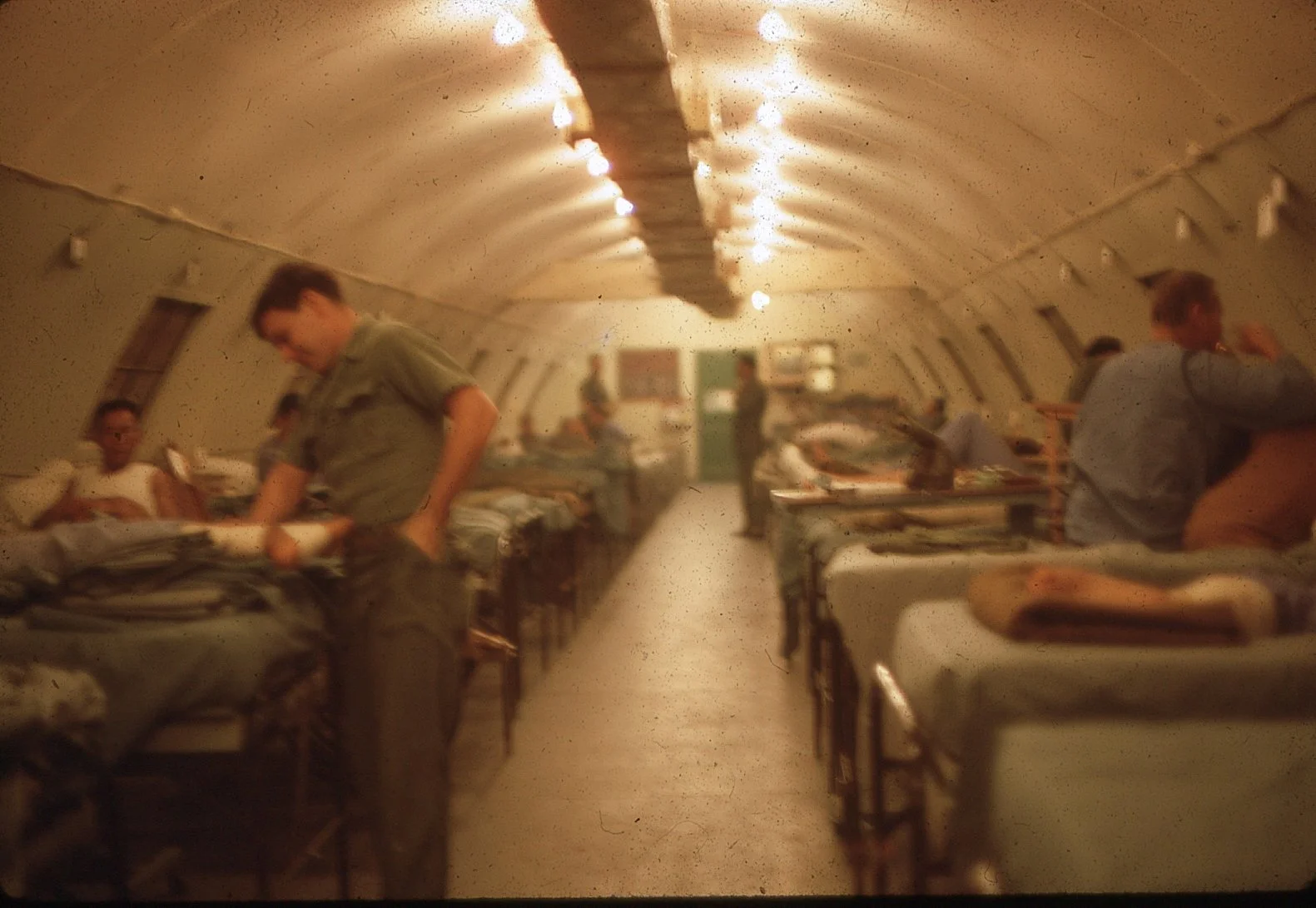
A hospital ward Kay Bauer attended while in Vietnam. (ID # 2025.2016.090)
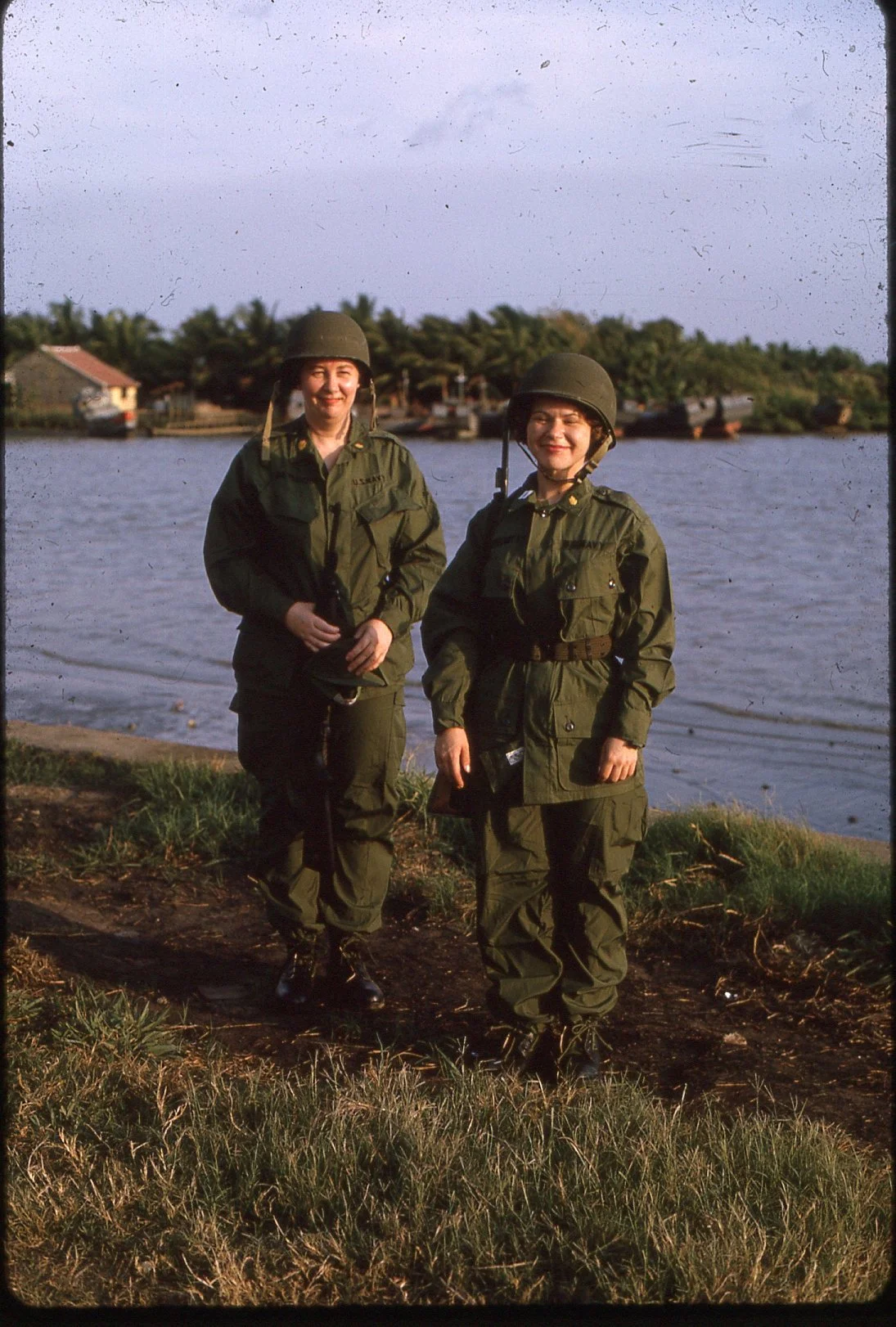
Kay Bauer and a fellow Navy nurse in combat fatigues in Rach Gia, ca. 1967. (ID # 2025.2016.071)
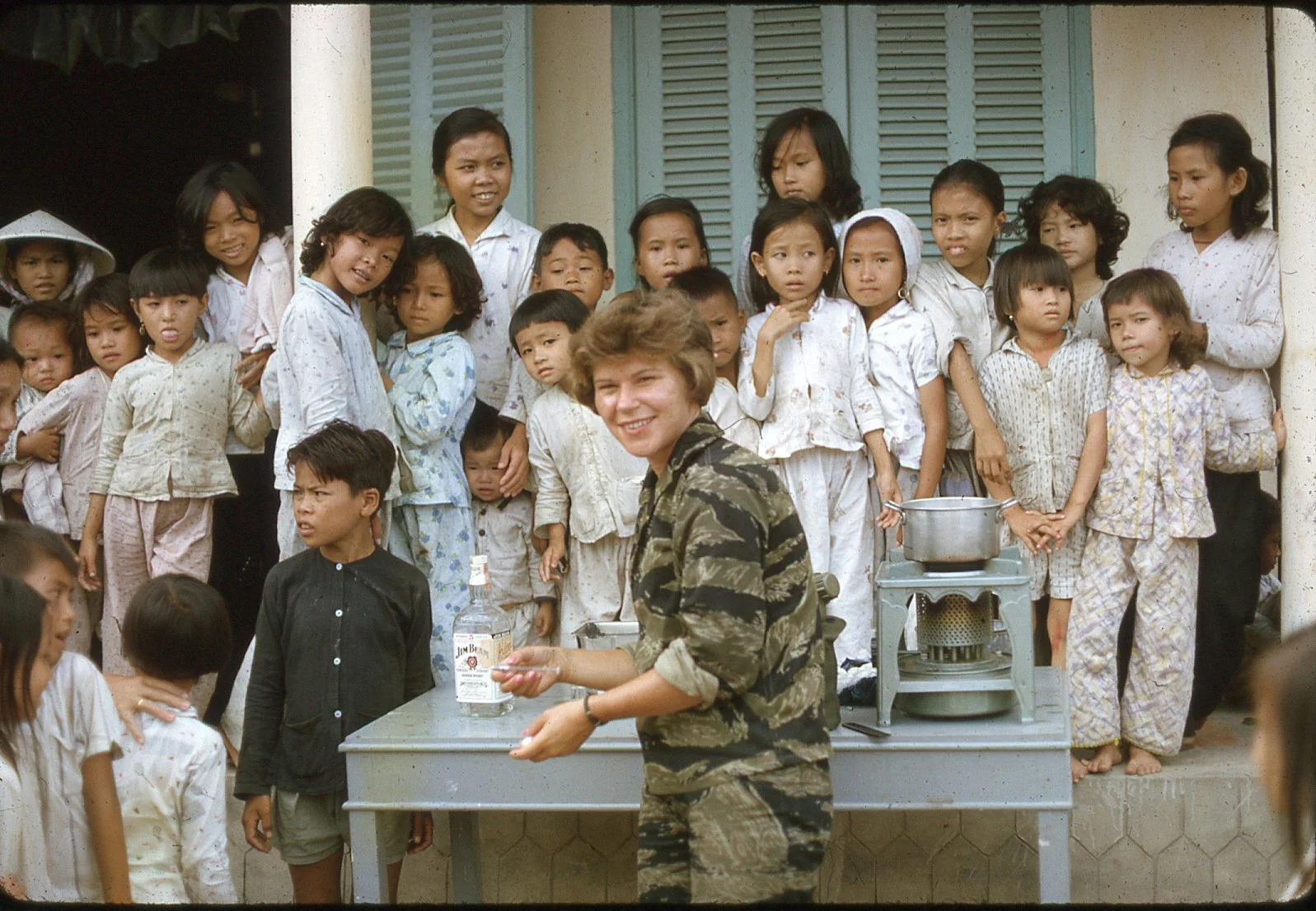
Kay Bauer inoculating Vietnamese children against plague, ca. 1967. (ID # 2025.2016.016)
Enlisting in the Military
Kay signed up for the Navy with some of her friends to pay for her education, much like people do today.
Pretend you’re standing in line with Kay as one of her friends. What are you talking about? What do you hope to experience in the military? How has the role of women changed from 1958 to today? What opportunities for employment or scholarships would Kay have now that she wouldn’t have had then?
medic vs nurse
We may use the terms “medic” and “nurse” interchangeably, but they are different. Here are some of the ways to tell the two occupations apart:
Training Duration: Medics typically undergo shorter training programs, while nurses complete more extensive education, often at a university level.
Scope of Practice: Medics focus on emergency care and first aid, whereas nurses provide comprehensive patient care across various settings.
Work Environment: Medics often work in the field, while nurses are primarily found in hospitals and clinics.
Responsibilities: Medics handle immediate life-saving interventions; nurses manage ongoing patient care and treatment plans.
Certification: Medics may have certifications specific to emergency response, while nurses are licensed professionals with broader healthcare qualifications.
Patient Interaction: Nurses typically have longer, more continuous interactions with patients than medics, who may see patients only briefly in emergencies.
Digging Deeper
The PURPOSE of PROPAGANDA is to make one set of people forget that the other sets of people are humans. — Aldous Huxley
In the Vietnam War, propaganda was wielded as both a tool of persuasion and a weapon of war. From bold posters calling Americans to enlist to the intricate, hand-painted works of North Vietnamese artists, propaganda was not merely about conveying information—it was about shaping perception and mobilizing action. Governments, revolutionaries, and even civilians relied on imagery, symbols, and slogans to galvanize support, inspire resistance, or stoke outrage. This art form, layered with cultural and political meaning, left an indelible mark on the war’s legacy.
Persuasion Through Posters
Propaganda posters played a pivotal role in mobilizing public sentiment during the Vietnam War. In the United States, they emphasized duty, patriotism, and heroism. Young men were bombarded with images of soldiers standing tall under slogans such as “Be All You Can Be” and “Your Country Needs You.” These posters used stark colors and commanding typography to create a sense of urgency, linking military service to ideals of honor and sacrifice.
Meanwhile, in North Vietnam, propaganda posters adopted a more nuanced approach. These works often featured hand-painted or silkscreened designs that fused traditional Vietnamese themes with European fine art influences. Under French colonial rule, many Vietnamese artists had studied abroad, learning techniques that emphasized movement, emotional depth, and painterly detail. This unique artistic heritage carried into the war years, lending Northern propaganda a refined aesthetic that stood in contrast to the bold, utilitarian style of U.S. posters.
Women frequently appeared in North Vietnamese propaganda, depicted as both warriors and nurturers. One striking image shows a woman standing in a rice paddy, a rifle slung over her shoulder and a baby strapped to her back. Her resolute expression embodied the collective strength of the Vietnamese people, blurring the line between civilian and soldier. These posters celebrated women as vital to the war effort, a stark contrast to the male-dominated imagery of Western propaganda.
Color & Symbology: A Language of War
Color and symbolism were deliberate choices in propaganda, used to evoke powerful emotions and convey complex ideas at a glance. In American posters, red, white, and blue dominated, evoking patriotism and linking the Vietnam War to past conflicts like World War II. The eagle, a symbol of strength and freedom, often soared across recruitment posters, reinforcing the idea of the United States as a global protector.
In North Vietnamese propaganda, red and yellow—the colors of the national flag—told a different story. Red symbolized the blood of martyrs and the revolutionary spirit of communism, while yellow represented hope and cultural unity. These colors, drawn from Vietnam’s identity, became synonymous with the fight for independence.
The lotus flower emerged as a recurring symbol in North Vietnamese art. Deeply rooted in Vietnamese culture and Buddhism, the lotus represented purity, resilience, and enlightenment. It often appeared blooming in the foreground of war scenes, a reminder that beauty and hope could endure even amid devastation. This symbol resonated with the Vietnamese people, reinforcing a sense of cultural pride and determination.
Dehumanization: Framing the Enemy
Propaganda often sought to simplify the complexities of war by framing the enemy in stark terms. U.S. posters portrayed North Vietnamese soldiers as shadowy figures lurking in jungles, emphasizing the idea of an unseen, pervasive threat. In contrast, North Vietnamese propaganda depicted American soldiers as faceless aggressors, their weapons aimed at women and children. These visuals reinforced the moral righteousness of each side while dehumanizing the other, fueling the resolve of their respective audiences.
The division extended to the use of flags. In American propaganda, the Stars and Stripes symbolized democracy and liberation, flying proudly over bases and in recruitment campaigns. For anti-war activists in the U.S., however, the flag became a symbol of disillusionment, often depicted in protest art as bloodstained or burning. In Vietnam, the red flag with a gold star symbolized unity and independence, carried proudly by Northern forces as a rallying cry for revolution.
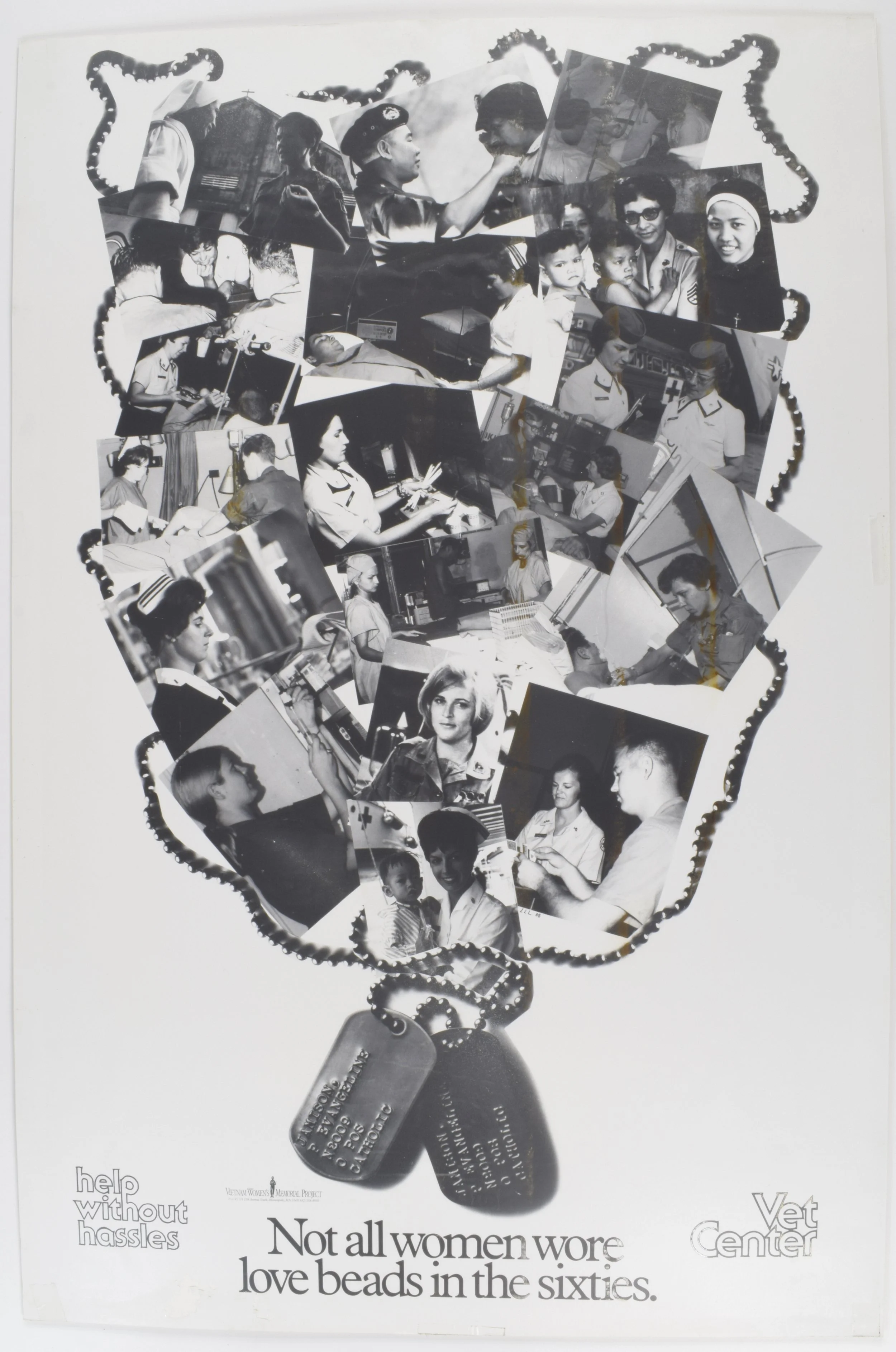
Foam board wall poster, approximately 2x3ft. Poster depicts several women who served in the Vietnam War and a pair of dog tags. There is a caption that reads: “Not all women wore love beads in the sixties.” Formerly displayed at the Coon Rapids Vet Center and was gifted to Kay Bauer. (Object ID 2025.2016.017)
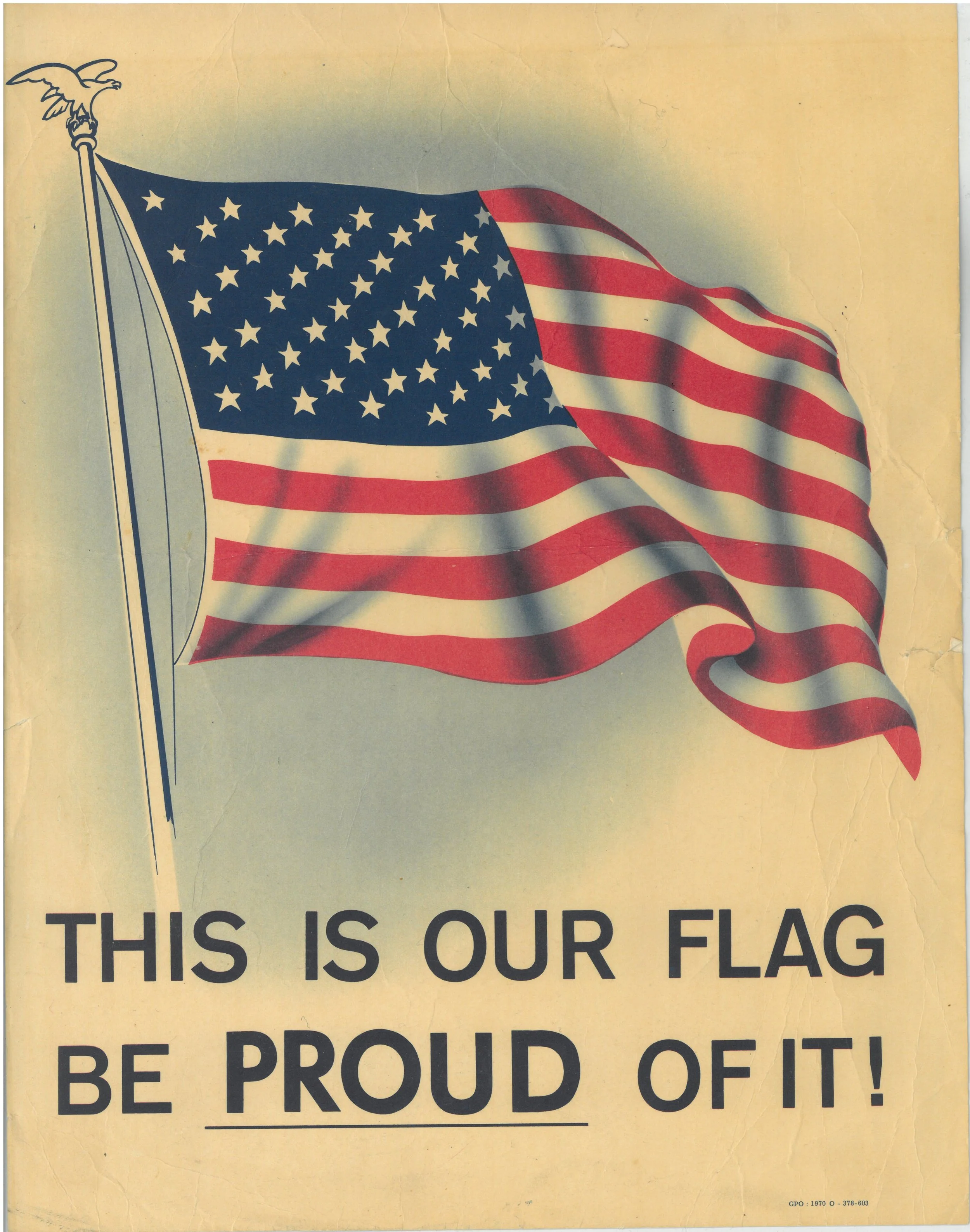
1970 poster (Object ID 2004.0000.127)
Echoes of Propaganda
The propaganda of the Vietnam War reflected its era, capturing the cultural, political, and emotional battles that defined the conflict. It blurred the lines between art and message, truth and manipulation. Whether through the bold posters of the United States, the fine art of North Vietnam, or the subversive works of protesters, propaganda shaped how people understood the war—and themselves.
Today, these works remind us that propaganda is more than a relic of the past. It is a testament to the power of art to influence, inspire, and endure. In the Vietnam War, it was a weapon of persuasion and a mirror of identity, leaving behind a legacy as layered and complex as the conflict itself.
Make a Poster: who would you influence today?
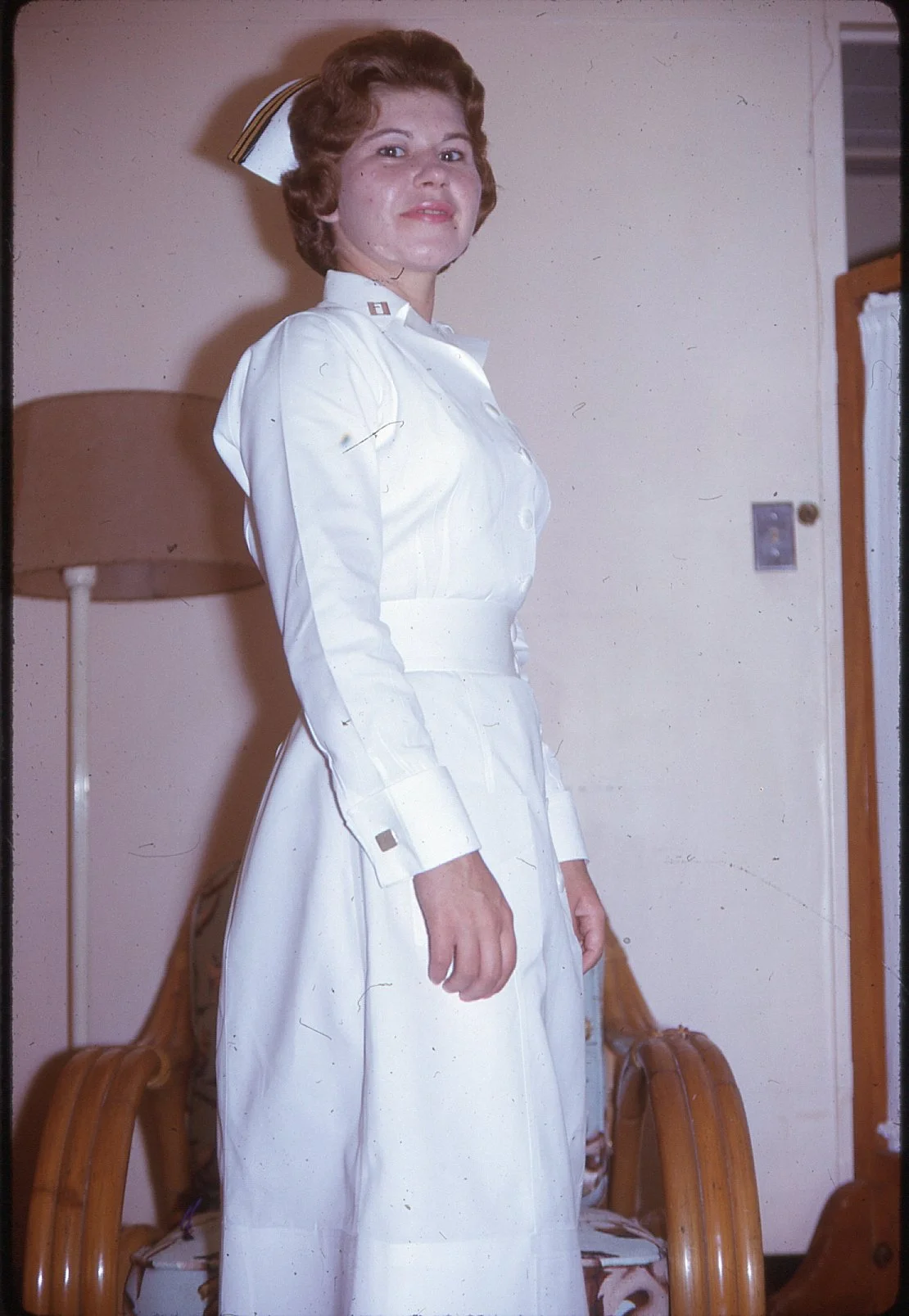
Kay in her dress whites.
Kay was born in 1936 and raised on a German-Catholic farm in Saint Paul, the second oldest of 14 children (six sisters and seven brothers). After attending a private Catholic high school, Kay attended Saint Catherine’s University to pursue a career in nursing, where she decided to join the Navy. “I was at Saint Kate's,” she later recalled, “and I changed my major so many times that I needed a fifth year, and there are no loans or scholarships for a fifth year. So I was going to have to leave without graduating… a friend came by and asked why I was so distressed. And I told her and she said, ‘Kay, come with us tomorrow morning. We're going to the down to the military. In Minneapolis.’ I said, ‘Why would you go there?’ And she said, ‘They have scholarships.’ I said, ‘What time should I meet you?’ So we went down there and there was a long line in front of the Army. The Air Force doors were closed. They never offer scholarships. There was a short line in front of the Navy. We joined the Navy.”
She reported for Officer Development School in Newport, Rhode Island, in 1958, a six-week basic training course for Nurse Corps officers. After commissioning as an officer, her first assignment was to the St. Albans Naval Hospital in Long Island, New York, where she spent three years. Her second assignment was to Yokosuka, Japan, where she spent a year and developed an appreciation for South Asian culture. However, her time in Japan was cut short when she received orders to Guam.
Kay arrived at the pediatrics unit at the naval hospital in Guam in late 1962. Shortly after she arrived, Guam was struck by Typhoon Karen, one of the most destructive events in the island’s entire history. She later recounted her experiences in a 2024 interview. “The wind was so strong we could not get near the door even to go over to the hospital… when it was all over, we went into the hospital without electricity. The electricity was gone… the only people who were brought to the hospital were pregnant women. So guess what was happening at the hospital.”
After her time in Guam, Kay was reassigned once again to Naval Station Great Lakes in Chicago, Illinois. While there, she was approached with a unique offer. The Navy, working in tandem with USAID (United States Agency for International Development), was sending a forward medical team to a civilian hospital in South Vietnam and needed nurses. She accepted the offer and volunteered to go, and in 1967, arrived in Saigon. The medical team was composed of five people: two surgeons, two nurses, and a senior enlisted lab technician. Kay’s team was sent to a hospital in Rach Gia, where they were tasked with providing care for South Vietnamese civilians and members of ARVN (Army of the Republic of Vietnam)
Kay later recalled an instance in which she was ferried to a small island to inoculate the local population against a plague outbreak. “...we had the glass syringes, and then we had the needles that we had to sharpen and sterilize, of course. And then we had, you know, the swabs and the alcohol and we had a Jim Beam bottle that we put the alcohol in… So we're lugging this stuff in and we get in there and they have these buildings with red crosses on them. And so that's where we go. And they have little tables and some chairs there, and that's all. They didn't have a thing. So I have pictures of that, of me doing that. And so who do they send? Do any adults come? No, they send all the children.”
Even in a civilian hospital, there were regular reminders of the war. “I remember was one time we went in one evening and a whole busload of people… so there were families that came in and sometimes the kids would be by themselves because, you know, the parents didn't make it. Well, there's one little boy came in and so I always gravitated towards the kids. And so taking care of this little one must have been about maybe three years old. And so I'm cleaning them up because they fall into the, you know, into the rice paddies… And then all of a sudden I go to his back and there's a piece looks like a lung sticking out… So I cleaned it really well and I thought, well, there's nothing I can do but push it back in and then tape it shut and he's still breathing. And I listen to him and, you know, and had him take deep breaths and he's okay. And so that's all you could do at that point, you know, and hope that he would be okay there.”
Kay was in South Vietnam until 1968, although she remained in the Navy for another two decades. After she returned to the US, she and several other female officers were invited to the White House to meet President Lyndon B. Johnson and commemorate the passage of a bill allowing women to attain flag rank in the military. She was stationed at the naval hospital in Quantico, Virginia, until she accepted a position as an officer recruiter in Minneapolis, where she oversaw the recruitment of prospective Navy staff corps officers across the entire Midwest. However, she wasn’t safe at home, either; in late 1970, both her recruiting office in Minneapolis and her neighbor’s house were destroyed by bombs planted by anti-war extremists targeting military recruiters.
Kay ultimately spent 13 years in active duty and 22 years in the Navy Reserve, for a total of 35 years spent in naval service. She retired with the rank of Captain (O-6) and raised two children with her husband, Vern. In the 1980s and 1990s, she became involved in a movement started by fellow military nurse Diane Carlson Evans to build a monument to female veterans of the Vietnam War and has worked to raise awareness of women’s service in the war ever since. Kay was interviewed by historian Kim Heikkila in 2005, and her story was included in Heikkila’s book Sisterhood of War: Minnesota Women in Vietnam. She also participated in an interview with the Anoka County Historical Society in 2024 and donated her Navy uniforms to the collections. She and her husband live in Hugo, Minnesota.