
Leslie Cowden
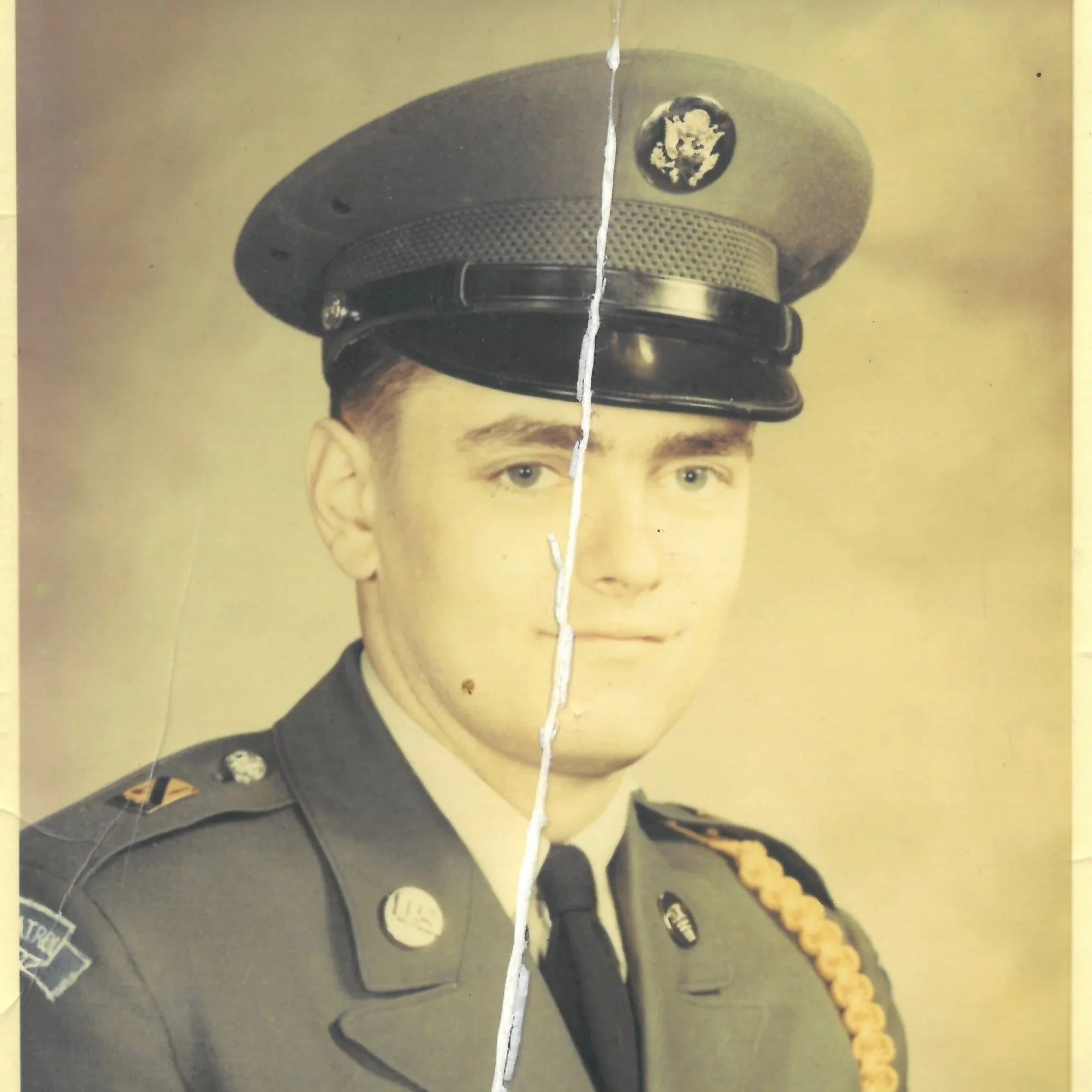
This image of Leslie Cowden has a crease down the middle of the paper. This damage was caused by Leslie’s brother, Don, carrying the photo in his wallet while he was gone. We do have a photo where the mark is fixed in Photoshop, but choose to use this one because of the story it tells. What happens when we change the story of images in history?

Color photograph of Leslie Cowden, likely within a year out of basic training. It is suspected that he is 19 or 20 in this picture (Object ID 2018.1810.028) How did his face and expression change between the two images? Why? If you didn’t know, how could you guess which photo was taken first?

This Silver Star medal, bar, and civilian lapel pin were awarded to Leslie Cowden of St. Francis during the Vietnam War. The medal is a large, gold-colored star with a small silver star in the middle, surrounded by a laurel wreath. The ribbon, bar, and lapel are blue, white, and red in the following configuration: narrow blue, narrow white, wide blue, wide white, wide red, wide white, wide blue, narrow white, narrow blue. All three pieces are stored in a black, gold-trimmed case with a pale gold velvet-and-satin lining. The front of the case reads "Silver Star Medal". (object ID 2018.1810.001)
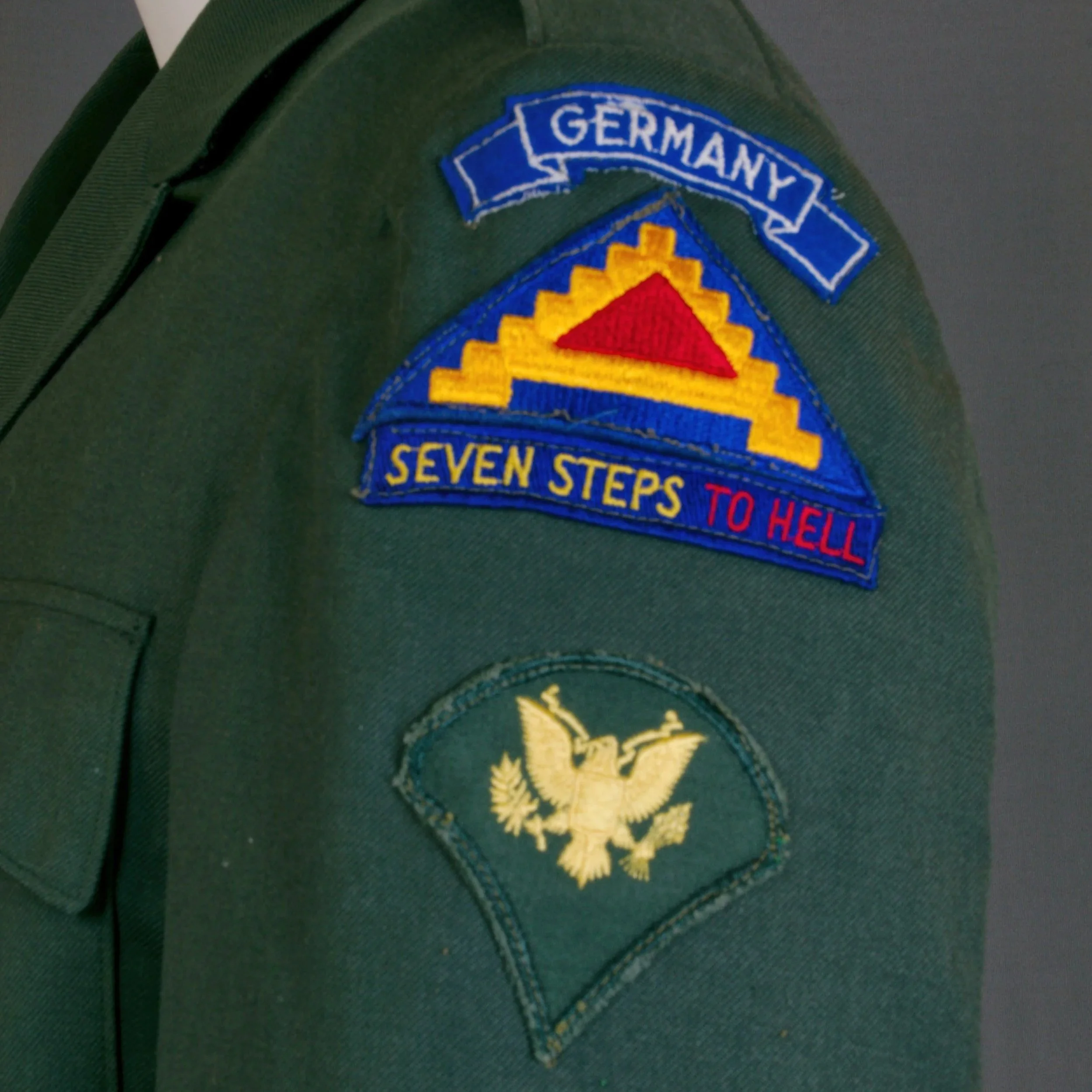
U.S. Army dress uniform jacket and pants that belonged to Leslie.
The jacket is green cloth with silver buttons. On the left sleeve just below the shoulder is a blue patch that reads "Germany" (Cowden was originally stationed in Germany before volunteering to go to Vietnam). Below that is the red, yellow, and blue pyramid insignia patch of the Seventh United States Army (which was stationed in Europe during the 1960s); below the pyramid is the unofficial motto "Seven Steps To Hell." On the right sleeve just below the shoulder is a blue patch that reads "Border Patrol". On both sleeves are Army specialist patches, green with a rounded top and diamond point at the bottom with a yellow eagle embroidered on them. Other decorations are visible on this jacket in Cowden's Army portrait (see item 2018.1810.019).
Leslie's mother, Elizabeth, informed ACHS that he had the silver buttons ordered specially because he preferred them to the standard gold buttons. (Object ID 2018.1810.023)
A Soldier’s Impact
People call Leslie a hero for good reason and tell his story to celebrate his wartime service.
What about the people he served with? What did they think of his actions? What would it feel like to be saved? Some people wonder why they survived and others didn’t — what would you tell them? What do you think you would do in that situation?
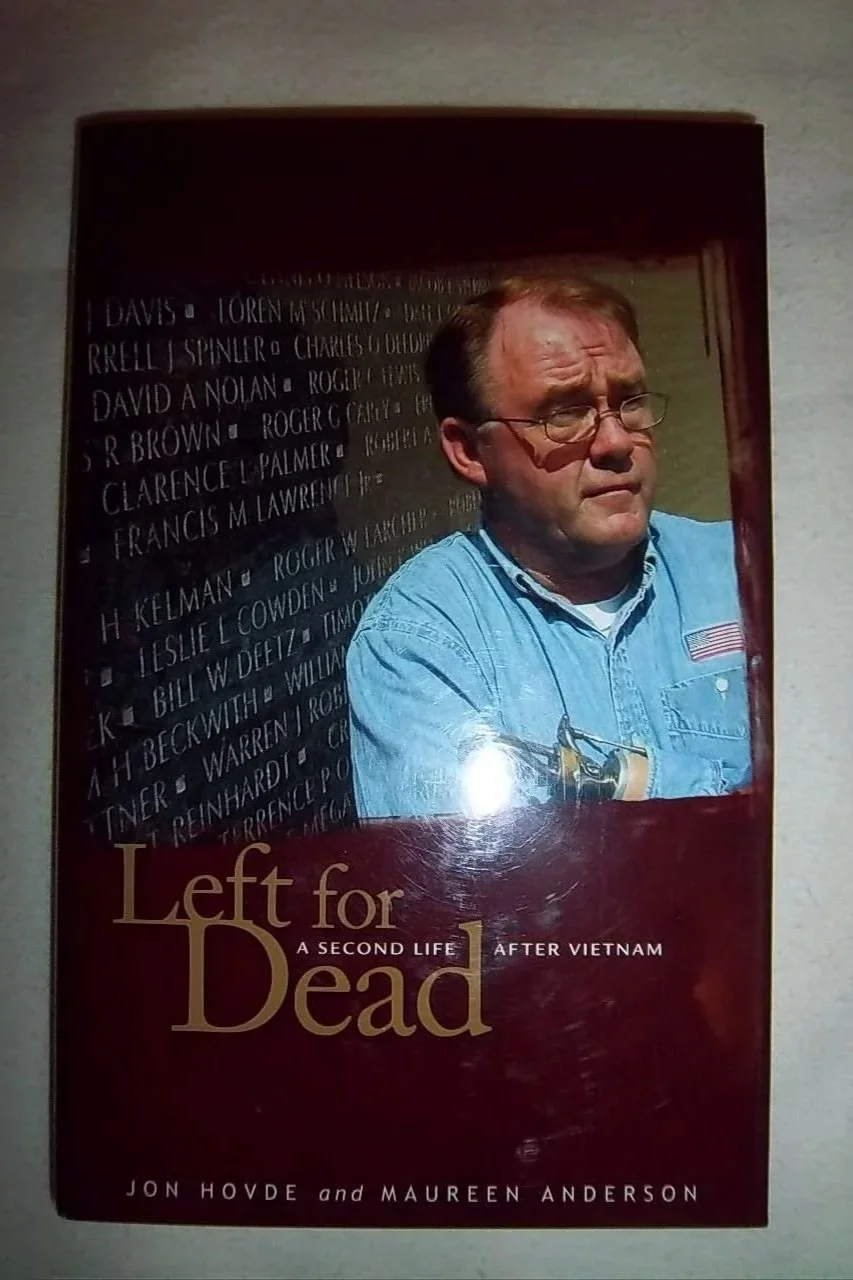
left for dead: A second life after vietnam
Jon Hovde's journey begins with despair and the struggle to stay alive and ends with hope and the inspiration to live. As a twenty-year-old soldier in Vietnam, Hovde lost an arm and a leg when the armored personnel carrier he was driving hit an antitank mine. He was nearly left for dead when the medic at the scene accidentally took his pulse in the arm that had been severed. For weeks, doctors gave Hovde very little chance of survival.
When Hovde finally returned home, the transition was not easy. He used alcohol and fast cars to cope with both the physical pain of his injuries and the emotional pain caused by uneasy stares from his friends and neighbors. The straightforward words of a highway patrolman finally opened his eyes to his reckless behavior: "Why would a guy like you, who's survived all you survived, want to come back and kill yourself on our highway?"
Hovde went on to marry his high school sweetheart, realize a successful business career, and become a leader of city and state school boards. In 1998, Hovde's war story found some closure when he successfully tracked down and was reunited with the nurse who had helped save his life. He was finally able to thank her. Left for Dead is a gripping memoir that not only recounts Hovde's remarkable recovery from his injuries, but recognizes the efforts of the people who aided him - including the courageous medic who rescued him, a caring army nurse, and army chaplains. Far more than just another tale of combat, Left for Dead will stir emotions in veterans, their families, and civilians alike. Hovde's lack of bitterness and abundance of hope is a source of inspiration to anyone overcoming obstacles.
Who do you think was the medic on-scene?
Digging Deeper
Everyone reacts to war differently. Some of those reactions come from which war they’ve served in, the type of welcome home they receive, and how their family and friends act afterward. These are some things to consider:
Emotional Resilience: Many people cope with the emotional impact of being wounded in a war through resilience. They may seek support from friends, family, or communities that understand their experiences. Sharing stories and feelings can aid in processing trauma and rebuilding a sense of normalcy.
Therapeutic Interventions: Those affected often turn to professional help, such as therapy or counseling, to deal with both physical and psychological wounds. Techniques like cognitive-behavioral therapy (CBT) or group therapy can provide them with strategies to cope with anxiety, PTSD, and other war-related issues.
Engagement in Activism: Some individuals channel their experiences into activism or advocacy work. By speaking out about their struggles or working to support other veterans and civilians affected by war, they find purpose and meaning in their pain, helping themselves while also fostering change within their communities.